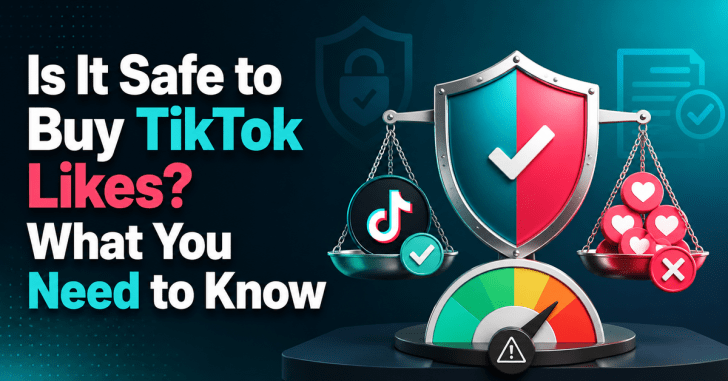
Is It Safe to Buy TikTok Likes? What You Need to Know
Buying likes has become a practice that has led to controversy under the social media influence era that we live in today where ideally, everyone should be focused on TikTok. While some people are more concerned about the safety of this practice, I am more interested in knowing the risks and the implications of buying likes. This article aims to inform readers about the risks and ethical implications of buying likes on TikTok.
This article doesn’t aim to stop people from continuing to buy likes, but to equip them with the effect that it can have on the algorithm and the visibility of the posts. This article also aims to provide alternative methods to improve engagement. This article aims to provide alternative methods to improve engagement. Read on to also learn about social media and its culture of authenticity.
The Dangers of Buying TikTok Likes
There are multiple problems associated with purchasing likess for TikTok, the biggest probably being that you could get your account banned. Having your account banned can have serious impacts on the digital economy that could last for years. Additionally, buying likes can be a very costly scam, because many of the companies that sell the service are just here to steal people’s money. When you buy from these companies, they give you fake likes, and people run the risk of getting their information stolen. Finally, people should really think about the long term costs of fake likes.
Because purchasing likes is a harmless way to increase fraudulent engagement, it can really ruin the creative nature and the influence of TikTok and skew what is important within the platform. Rather than generating value through real engagement, people falsifying engagement ultimately creates a heatless and fake platform devoid of real engagement.
Spotting Fake Likes on TikTok
The fake like phenomenon on TikTok has many tell-tale signs. An example of this is going viral within a short period of time. One example of this would be an unusually large amount of likes on your videos compared to usual likes. Looking more deeply into these accounts reveals whether or not these accounts are real. A red flag would be if these accounts have no information or if they are the only account activity of that account being the like of a video.
Spotting fake likes also heavily relies on real engagement. Likes are not engagement, meaning users like your video and then leave. Good engagement means the user likes your video, and then comments on the video, shares the video to their story, or posts the video to their page. Viral videos with thousands of likes, but zero engagement is a red flag to fake likes.
Another good indicator of fake engagement is the timing. Automation programs run on artificial intelligence, meaning users do not like videos when the video is posted, often times likes are posted late at night or in the middle of the night. If you want to steer clear from fake engagement, you want to pay attention to these things. Understanding how fake engagement works is the best defense against fake engagement on TikTok.
The ethics of buying TikTok likes
Purchase likes and followers on any social media platform to help boost your content’s engagement, and that’s the reason why people do it. TikTok likes help promote your content to a wider audience while inflating your engagement. However, like all other social media platforms, fake likes and follows are a terrible idea. Not only do they really complicate the authenticity of your content, but they also make you look unprofessional. It also teaches younger audiences the blue check is the most important factor of social media platforms by making them think likes and follows should be prioritized over everything. It also reflects really poorly on you. The people who follow you end thinking of you as a fraud and because of your fake likes, you end up getting a bad name and a bad reputation. It’s always better to have your audience and the algorithm think you’re the real deal rather than endanger your relationship by faking it.
At the end of the day, buying likes sells your soul for a few seconds of fame and a dopamine hit, while being honest really creates trust and builds a community. Approaching social media ethically is how you become the most famous while remaining the most real. An Internet environment that is honest is much preferred over one that is reality faked.
How purchasing likes on TikTok affect the algorithm and visibility
How purchasing likes on TikTok affect the algorithm and visibility is an important consideration. When purchases are made, likes quickly change to signify popularity to the algorithm. This in turns makes the algorithm show the content to more people, which quickly increases post visits and engagements. Like purchases trick the algorithm, and post visibility drops. The algorithm tries to spot fake engagements and will push the content even more out of sight. Like purchases also give people a false sense of success, because people don’t stick around to engage with purchased likes. TikTok is a social platform that needs to have real and organic interactions to see engagement with content. Out of all the social media platforms, TikTok needs real content engagement the most, because success is won by quality and real engagements rather than games. In order to gain visibility on TikTok and have quality success, the focus should be given to creating content that engages real people rather than tricks the algorithm.
Buying likes, at first, may increase visibility, but having genuine followers who enjoy content is how success on TikTok should be viewed. In order to have a strong social presence that truly resonates with other people, quality engagement must be prioritized over quantity.
Expert opinions on the practice of buying TikTok likes
Professionals in the social media marketing industry have varying opinions on the subject of the buying of TikTok likes. Many digital marketing professionals advocate for strategic, organic ways of growing a following. They stress the importance of having high quality content and having a genuine interest in the followers of a page; without these, the engagement and success of a page will be short lived. Some industry professionals, however, believe that buying TikTok likes builds the brand and strengthens the reputation of the company. Other professionals buying likes is unethical. They believe that the risk of audience engagement is greater than the reward.
There are opinions within the industry that buying TikTok likes, when done strategically, can build the initial audience needed to reach a larger, more diverse audience. Socialsanta has proven to be successful in the fast paced world of social media. This opinion is also made with a caveat; organic audience growth will not be sustained, and lengthy engagement and great content is still needed for a profit to be made on the initial investment.
Ultimately, there is a consensus among the social media industry experts that, in order to be successful, Tik Tok creators must balance quality content and creativity.
What You Should Know Before You Buy Likes on Tik Tok
Did you know Li-ability is attached to the purchase of likes? Generally, buying likes on any social media app is frowned upon and seen as a cheap way to gain social status. Buying likes can also result in the suspension of your apps, despite adhering to the rules and terms of use set by the social media site. Purchasing likes shows that you don’t care about how you will be perceived, but it is a clear sign that you are willing to skip the hard work it takes to actually create a following.
If you want to avoid losing money on a court case, then don’t buy likes. The only way to achieve real liability is to avoid breaking the law (sorry if this was a given). Because bots aren’t people, you can’t trust that they will make you famous. If you can create your own success, why would you put so much trust into a like-generating algorithm?
Don’t get me wrong, likes are important, but so is your integrity. Liking is simply a way to say, “This is good.” While likes are very important on social media, you should strive to make real personal connections in reality.
Creative alternatives to buying TikTok likes
Avoiding the purchase of TikTok likes means creating content made for your audience. This can be done by showing creativity and ‘looks’ by using aesthetic combination techniques for videos to ensure creativity and Video engagement. Remember, ‘Likes’ and ‘Follows’ are heart-winning tricks. They should come with audiences that resonate with what you’re offering rather than being fake. Making a connection with your target audience is the key to growing your TikTok organically.
The consequence of purchased likes on TikTok
If you are looking for the effects of purchasing likes on TikTok, it is crucial to consider some pros and cons. The first effect is that there will be an increase in exposure and credibility. It is, however, to be noted that the effects will be short lived. The organic engagement is the following, and purchased likes will be a hindrance to this effect. For a successful TikTok, there’s a need for a following that is both loyal and active. It is also worth noting that purchased likes will give a false perception of success. If you at any time separate your real audience and reach, you will lose. The way to give your following the engagement you really want is to give high quality content that is meaningful and creative. Organic growth will help you give your audience followings you really want, and they will really appreciate your creativity.
To summarize, sustained success on TikTok necessitates valuing engagement over manipulated metrics. Although likes can be purchased, the jail will eventually break; the focus should be put on liking the followers and doing so will bring dividends of loyalty, trust, and bond in the long run. Community is the heart and soul of social media, appreciate and encourage your community and soon you will reap your true success.
Conclusion
The many intricacies of buying TikTok likes makes it apparent that there are way more ethical issues and risks than there are benefits. The integrity and authenticity of one’s content should take priority over meaningless engagements.
Focusing on making high quality content for their audience is what creators on TikTok should be primarily focusing on instead of buying likes. Authenticity and genuine relationships are what make people successful in the long run on social media.